News and Announcements
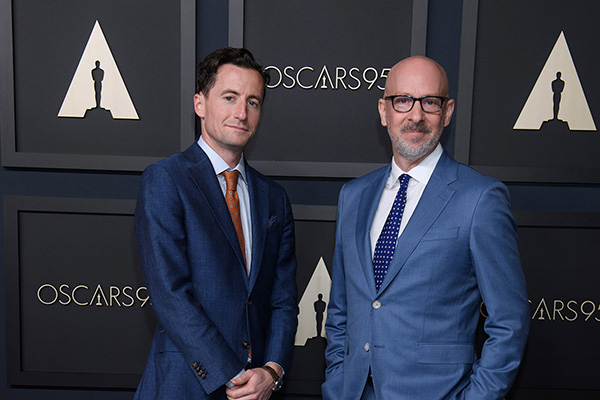
SFSU alumnus Conall Jones (B.A., ’05) can now add “Oscar winner” to his résumé. The short documentary “All the Empty Rooms,” which Jones produced with director Joshua Seftel, won the Academy Award for Best Documentary Short at the 98th Academy Awards on March 15.
The 33-minute film delivers a deeply moving look at the aftermath of school shootings by focusing on the preserved bedrooms of children who were killed — spaces left untouched by grieving families as memorials to lives cut short. The documentary follows CBS News correspondent Steve Hartman and photographer Lou Bopp as they travel across the United States documenting these rooms and the families who maintain them.
One of the ceremony’s most emotional moments came when Gloria Cazares, whose 9-year-old daughter Jackie was killed in the 2022 school shooting in Uvalde, Texas, took the stage to accept the award on behalf of the film. Cazares spoke about her daughter’s life and the enduring grief families carry after such tragedies, reminding the audience that the children represented in the film were “more than just a headline.”
For Jones, the Oscar marks a milestone in a career rooted in storytelling with social impact — a path that began during his time at the University.
At SFSU, Jones studied in the School of Cinema, where he developed the creative foundation that would lead him into documentary filmmaking and television production. His projects often highlight ordinary people navigating extraordinary circumstances — a storytelling approach that resonates in “All the Empty Rooms,” where intimate spaces become powerful symbols of loss and memory. His 2022 film “Stranger at the Gate,” about a Marine struggling with Post-Traumatic Stress Disorder (PTSD), was also nominated for a Best Documentary Short Oscar.
Jones reflected on the power of compassionate storytelling in a 2023 interview with SFSU News. “There’s this incredible transformative power in kindness,” Jones said, explaining how stories that center empathy can help audiences better understand one another.
Jones’ Oscar win also highlights a strong year for SFSU alumni at the Academy Awards. Two other Gators were nominated this year: actor Delroy Lindo (B.A., ’04), who earned a Best Supporting Actor nomination for his performance in Ryan Coogler’s genre-bending horror film “Sinners,” and sound professional Christopher Scarabosio, nominated in the Best Sound category for his work on “One Battle After Another.”
Together, the nominations and Jones’ win underscore the continued impact of SFSU alumni across the film industry — from documentary storytelling to acting and technical craft — bringing powerful stories to audiences around the world.
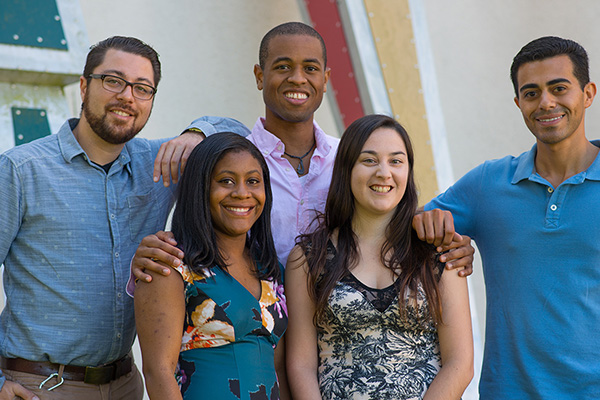
When SFSU alumna Muryam Gourdet (M.S., ’16) wanted to quit her Ph.D. program, she received a message from one of her former mentors in the SFSU Student Enrichment Opportunities (SEO) program: “Don’t quit. Come talk to me now.”
She came back to campus to talk to SFSU Professor Teaster Baird, who was the Chemistry and Biochemistry department chair at the time and is now a College of Science & Engineering (CoSE) associate dean. Other SFSU mentors reached out to Gourdet — in person and by phone and email. Some even contacted faculty and program managers at Gourdet’s Ph.D. institution, University of California San Francisco (UCSF), to help in situations where she felt powerless.
“It was full force,” she said.
Gourdet successfully finished her Ph.D. at UCSF. She also earned a mentorship award there — UCSF faculty started asking her for mentorship advice — and accomplished several other achievements along the way. After her Ph.D., she worked in industry for a few years.
It’s a story heard time and time again in SFSU’s SEO community.
“Once SEO, always SEO,” said SEO Director Megumi Fuse, a professor in the Department of Biology.
Since the early 1990s, SEO has housed training grants for undergraduate and graduate students in CoSE, providing research opportunities, stipends, full tuition, career development opportunities, graduate application guidance and community. Although it mostly serves students in Biology and Biochemistry and Chemistry, SEO has impacted nearly all majors in the college at one point.
In a new PLOS One paper, Fuse and collaborators at SFSU and California State University, Los Angeles (CSULA) demonstrate that this system leads to master’s students enrolling in and successfully completing prestigious Ph.D. programs, regardless of undergraduate grade point average (GPA). It supports the larger movement for a more holistic assessment of student success.
GPA isn’t everything
“We have this amazing pool of students that are hidden,” said Fuse. “Things like their GPA and need to work mask their ability to be successful. Once we give them money and mentorship, we see their true abilities.”
SEO supported over 500 students between 1992 and 2019. Eighty-nine percent of the 330 SFSU master’s students who applied to Ph.D. programs were accepted. Fuse's collaborators at CSULA’s MORE (More Opportunity in Research) office reported a similar pattern. Students enrolled in top research institutions such as UC Davis, UC Berkeley, University of Washington, UCSF, Harvard, Stanford and more.
Importantly, the 30 years of data showed that students with low and high GPAs (below and above 3.0, respectively) — regardless of their undergraduate institution — were accepted to and completed programs at comparable rates.
Undergraduate GPA is often used as a predictor for student success and as an early filter — but the metric provides an incomplete picture of a student’s potential.
“I had no money. Paying my bills came first; school came second,” Gourdet said of her undergrad years. She had been working at Ikea for years and was trying to figure out how to make that a sustainable career. “My GPA was a perfect map reflecting things I was going through in my life.”
SEO not only funded and supported Gourdet’s master’s program but adapted to meet her specific needs. When she started at SFSU, she had a 6-month-old daughter.
“They paid my travel fees for conferences and gave me resources so I could pay for my daughter to come with me because that would have been a challenge,” she explained. “The money they gave provided the opportunity to dedicate my time and efforts to research.
Network with insider insight
“I applied to San Francisco State and San José State. I basically made my decision based on the SEO support I was going to get,” said Dennis Tabuena (M.S., ’16), now a postdoctoral fellow at the Gladstone Institute. “I still think my favorite experience in research was the two years I spent at SFSU. It was probably the most productive years in my whole research career.”
Though Tabuena didn’t have the best grades as a UC Merced undergrad and only did research in his last year, he was able to transition to a biotech job. The problem was that he quickly discovered a career ceiling that required a Ph.D. to break. After a few unsuccessful Ph.D. application cycles, he decided to pursue a master’s degree as a stepping stone.
SEO’s extended network was invaluable to Tabuena’s success earning a Ph.D. in Neuroscience from the University of Washington, Seattle. While SEO provided coaching, practice interviews and writing support, the office also brought university recruiters to talk about programs and provide a peek behind the admissions process.
“I’ve been able to get big-name universities to come to SF State on their dime. They fly recruiters in; they pay for the hotels, the airfare,” Fuse explained. “UCSF, Stanford, Harvard — they come to SFSU to recruit. They realize that SFSU is a goldmine for students.”
Tabuena recalls some recruiters would even provide feedback on personal statements and answer questions via email. They provided insight that could only be provided by someone on admissions committees, something that was lacking in his industry experiences.
SEO’s students and alumni themselves are critical to the health of the SEO ecosystem. As Gourdet prepared to leave industry, SEO connected her with alumni who had similar career experiences and trajectory. She has been coming back to SFSU two or three times a year for on-campus events.
The lasting SEO effect
“It’s so many layers of mentorship that hopefully [students] don’t fall through the cracks,” Fuse said. She and her collaborators built the SEO infrastructure with longevity and a culture shift in mind. “Students also learn to mentor the next generation. I think one thing you’ll find with low-income minority students is that they want to give back to their community.”
SEO scholars like Juan Mendoza (B.S., '03) have gone on to become professors carrying on the tradition of the high-caliber science and intentional mentorship at prestigious universities.
Tabuena wants to stay in academia. As an SFSU student, he used to mentor community college summer interns, so he’s continuing to do this as a postdoctoral fellow at the Gladstone, a research institution affiliated with UCSF.
“We’re giving people that opportunity to get into the lab. These people are not in a position where [research experience is] readily available to them,” he explained. “It’s very important for me to keep doing that now that I’m on the inside.”
Thanks to her campus visits, Gourdet just started her dream position as program manager for SFSU Assistant Professor Archana Anand’s Phage Pathways program. The Department of Energy-funded program with two national labs is creating a pipeline to train students for the renewable energy workforce.
“I tell students that the most important thing is the network you build, not the things you learn. You can learn material from anywhere; you can Google a lot,” Gourdet said. “But knowing the right people to guide your next steps is critical.”
Learn more about the Student Enrichment Opportunities (SEO) program at SFSU.
Photo by Megumi Fuse/Student Enrichment Opportunities
The SFSU Academic Senate urges all faculty and staff to participate in the voting process. The spring 2026 Academic Senate voting period has started and will close at 5 p.m. Friday, April 10.
Voting sites:
For questions, please email the Senate office at senate@sfsu.edu.
With the launch later this year of the redesigned sfsu.edu site, SFSU is implementing a formal web governance plan to ensure sfsu.edu remains accessible, consistent and aligned with the University’s strategic priorities.
As the University’s primary platform for marketing, recruitment, retention and public information, sfsu.edu is mission-critical. Clear governance protects this investment while strengthening brand integrity, accessibility and user trust.
Why this change
Over time, the website evolved in a decentralized way, resulting in:
- Fragmented ownership
- Duplicated or inconsistent content
- Accessibility risks
- Brand inconsistencies
The new plan shifts the University from decentralization to coordinated participation — maintaining collaboration while establishing clear standards and accountability.
What the plan does
Web governance is not a one-time project. It is an ongoing system of:
- Defined roles and responsibilities
- Clear publishing standards
- Structured workflows
- Quality assurance and accessibility reviews
The Office of Strategic Marketing and Communications (SMC) serves as the strategic lead and primary owner of sfsu.edu. The Technology Governance Board provides executive oversight, with Information Technology Services supporting technical infrastructure.
Every page must have a designated owner, defined as the person accountable for the page content being correct and up to date. Core University messaging will be managed centrally to reduce duplication and confusion.
Accountability and quality
The plan includes:
- Regular audits and maintenance reviews
- Accessibility and content quality standards
- Required content management system training tied to publishing access
- Support-first compliance processes, with escalation if needed
Clear governance reduces rework, minimizes risk and ensures a stronger, more unified digital presence.
For more information
Additional details about roles, workflows and implementation timelines will be shared with campus stakeholders in the coming weeks.
For questions, please email SMC at marcomm@sfsu.edu or visit the website redesign web page.
Academic Affairs is conducting an internal search for our University Library dean. The position is to be filled by May.
The search committee was selected following Senate policy No. S23-180. Detailed search information will include a position description and a search profile. Application procedures will be shared on the Academic Affairs website at as information becomes available.
Search committee:
- Miguel Abad, assistant professor, Child and Adolescent Development
- Tanya Hollis, associate librarian, J. Paul Leonard Library
- William Jacobs, associate librarian, J. Paul Leonard Library
- Bella Martinez-Bernal, Associated Students representative
- Yvette Ortiz-Rivera, Associated Students representative
- Alexandria Post, senior assistant librarian, J. Paul Leonard Library
- Noah Price, associate dean, Graduate Studies and Career Services
- Faith Rusk, associate librarian, J. Paul Leonard Library
- Christopher Salcedo, senior assistant librarian, J. Paul Leonard Library
- Elliott Scheuer, course materials and resource sharing specialist, J. Paul Leonard Library
- Kendra Van Cleave, chair and librarian, J. Paul Leonard Library
Applications are invited from faculty members (lecturer and tenure/tenure-track faculty) for the 2026 Center for Equity and Excellence in Teaching and Learning (CEETL) Teaching Award. The awards honor faculty members who have made a difference in the lives of SFSU undergraduate or graduate students through exemplary teaching practices.
CEETL is interested in learning how faculty connect students to their communities, make their courses relevant for students and prepare them for the real world. How do you foster communities of care in the classroom and beyond? How do you partner with students to create social connections, community and belonging in the classroom?
Teaching practice should reflect CEETL’s values and mission. Please email your application by Wednesday, April 1, to CEETL at ceetl@sfsu.edu with “Application for 2026 Exemplary Teaching Award” in the subject line.
Please visit the 2026 CEETL Teaching Awards web page for more information on submission procedures.
The College of Liberal & Creative Arts College Undergraduate Research Experience is accepting applications for its 2026 – 2027 student-faculty grant programs.
Students are encouraged to apply for the Marcus Undergraduate Research Fellowship supporting research and creative activity in partnership with a faculty mentor. It awards $3,000 to the student and $1,000 to the faculty mentor. The application deadline is Wednesday, April 1.
Faculty are encouraged to apply for the Marcus Undergraduate Research Assistantship grant supporting student research assistance on a faculty project. It awards $1,000 to the faculty mentor and $2,000 to each student assistant (one or two students). The application deadline is April 1.
For more information, please email See-Won Byun at sbyun@sfsu.edu.
The University Budget Committee (UBC) is accepting nominations for staff and faculty members. No experience is needed; this is a unique opportunity to learn about University financial operations.
Time commitment: UBC meets monthly during the academic year. Time is needed to attend meetings, review materials and potentially serve on a workgroup. To learn about the UBC, attend a meeting or review the list of current members to inquire about their experience.
The nomination deadline is Monday, April 6. Please email UBC at ubc@sfsu.edu for your nomination form.
“Explore SFSU: Admitted Student Day” is the University’s signature spring event for admitted students and their families — a day for them to visit campus, make connections and learn about life as a Gator. It will take place Saturday, April 11, 9 a.m. – 2:30 p.m.
Please consider serving as a general ambassador for wayfinding, greeting, setup, etc., to assist in making this a great experience for our guests and a great success for our University.
Ambassador shifts are 7 a.m. – 2:30 p.m. Lunch will be provided for all who help for the day.
Please sign up via Qualtrics by Friday, March 27, to be an “Explore SFSU” ambassador.
The Academic Senate would like to thank everyone who joined its most recent “Question of Interest” session that addressed the shift to 12 weighted teaching units (WTUs) of teaching and the Research, Sholarship and Creative Activities assigned time process.
The next “Question of Interest Session” will be held Thursday, April 2, 1 – 2:30 p.m., in Library 121. Space is limited.
This follow-up Senate “Question of Interest” will continue to address the 12-WTU instructional workload. Come share your knowledge, questions and concerns. The goal is to support shared understanding and identify key considerations to inform next steps in policy development and implementation as college committees continue their work.
For questions, please email the Academic Senate at senate@sfsu.edu.
Savings Plus offers learning webinars to help you manage your money and plan for your future using a 401k or 457b.
Schedule:
- Friday, April 10, 2 – 3 p.m., “Taxes and Retirement”: How to reduce taxes with your 401k/457b and earn toward your financial goals. Topics include tax planning strategy, why starting early matters, key differences between 401(k)/403(b) and 457(b) plans, and available pretax, Roth and investment options.
- Friday, May 8, 11 a.m., “Nearing Retirement with Savings Plus”: For those ready to retire within five years with a 401k or 457b and how to defer lump sum separation pay from unused vacation time at retirement.
Prospective students are invited to join an information session on Wednesday, April 15, 6 – 7 p.m., or Thursday, April 16, noon – 1 p.m., via Zoom to learn about the Department of Child and Adolescent Development’s undergraduate programs.
Please RSVP via Qualtrics for the Child and Adolescent Development information sessions.
The School of Social Work Title IV-E Program’s Child Welfare Career Symposium will take place Wednesday, April 22, 9 a.m. – 2 p.m., at the Student Life Event Center (Annex 1). The symposium’s theme is “Pathways to Child Welfare: Careers, Impact and Practice in Social Work.” Encourage students who may be interested in the Child Welfare within the Master of Social Work program to attend this event.
This professional development event introduces undergraduate and community college students to careers in child welfare and related human-service fields. Participants will learn about career pathways, educational and licensure requirements, internship opportunities and transfer options. They will have the opportunity to connect with professionals, agencies and graduate programs.
Please RSVP by Monday, April 13, via Qualtrics for the Child Welfare Career Symposium.
For questions, please email Devi Ruslani-Reyes at druslani@sfsu.edu.
SFSU Spotlight
Professor of Kinesiology Susan Zieff contributed an op-ed to The Fulcrum on March 11, arguing why we should watch the Paralympics and what we can learn from it.
“It’s elite sport at its most essential: focused athleticism, hardcore competitiveness and record-breaking performances,” Zieff wrote. “And to watch it closely is to encounter some of the most complex questions sport has to offer — about fairness, performance, technology and the body itself. For these reasons, the Paralympics offer a spectator experience that’s less about overcoming and more about mastery with diverse bodies.”
Ahead of the annual American Association of Geographers (AAG) meeting, the organization published a profile on the SFSU School of the Environment (SotE). Along with highlighting the school’s expertise, it notes SotE’s foundation of collaboration, presence in the community and ability to prepare students for evolving workforces.
The AAG 2026 meeting was held March 17 – 21 in San Francisco. Along with other SFSU participants, six faculty members and three students from SotE presented. One faculty member led a field trip.
In a recent Quanta Magazine article, Mathematics Professor Matthias Beck provides insight about the “lonely runner” problem. As a conjecture in number theory, it hypothesizes the long-term behavior of runners on a circular track. It postulates that if runners start jogging around the track, each maintaining a distinct pace, each runner will end up relatively far from the others (“lonely”) at some point.
The conjecture was first made in 1969. By 2007, mathematicians proved it for as many as seven runners, but then research stalled until 2025. Beck explains even adding one runner makes the task “exponentially harder,” so the jump from seven to 10 is impressive.
“It has so many facets. It touches so many different mathematical fields,” said Beck, who has published articles and given a talk at the National Museum of Mathematics on the topic.
Erik Peper, professor of Recreation, Parks, Tourism and Holistic Health, presented the invited online lecture “Focused from Within: Body-Mind Tools to Thrive Beyond Screens” at the Congress of the Österreichische Gesellschaft für Biofeedback und Psychophysiologie on March 14.