News and Announcements
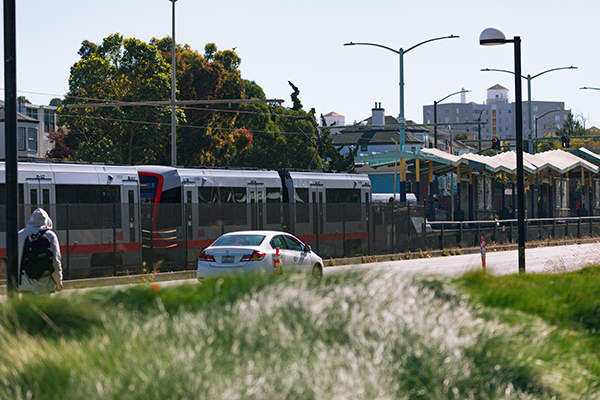
Caltrans is scheduled to begin the second and final phase of the 19th Avenue Rehabilitation Project, after the successful completion of the first phase in January.
The second phase will repave all northbound and southbound lanes of 19th Avenue (State Route 1) between Lincoln Way and Holloway Avenue, approximately 18.8 lane miles, and Park Presidio Boulevard and the California Street intersection.
Organizing the work in three weekend closures will reduce impact on the public from 40 to nine days. For all three closures, two lanes are scheduled to be fully closed with one lane open for public transit, emergency responders and local access.
Schedule:
- Friday, April 24, at 7 a.m. – Monday, April 27, at 5 a.m. on northbound 19th Avenue from Sloat Boulevard to Lincoln Avenue
- Friday, May 8, 7 a.m. – Monday, May 11, at 5 a.m. on southbound 19th Avenue from Lincoln Avenue to Sloat Boulevard
- Friday, May 22, 7 p.m. – Monday, May 25, at 10 p.m. on southbound/northbound 19th Avenue from Sloat Boulevard to Holloway Avenue
Please read the Caltrans press release for more information.
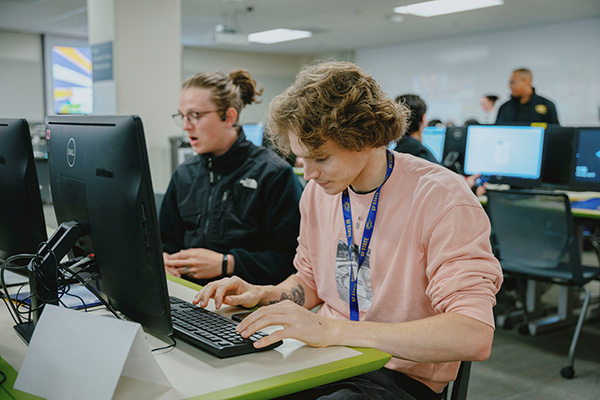
Friday, April 24, is the federal compliance deadline for the new 2026 Title II Update. All documents on SFSU websites need to be archived, remediated to be accessible or removed.
Please keep up the great work past the deadline. After April 24, the Accessible Technology Initiative will continue our efforts toward getting all SFSU websites to meet Web Content Accessibility Guidelines 2.1 Level AA standards.
If you need help making your documents accessible or have any questions, please email the Accessible Technology Initiative at access@sfsu.edu.
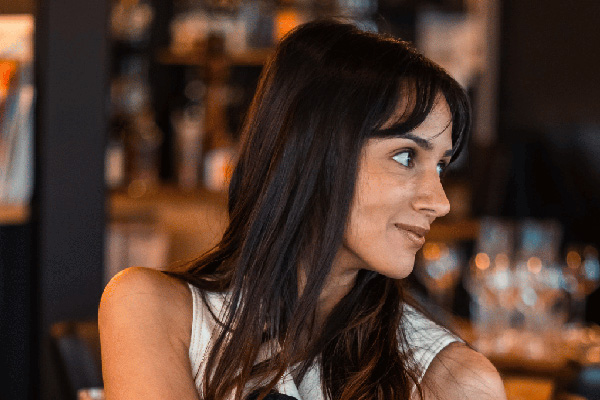
For SFSU alumna Ashley Santiago (B.S., ’16), scent is memory: tied to a family member’s favorite perfume, a moment in high school or her freshman year of college. And it’s not just a reflection of the past. For Santiago, scent is also her future.
Santiago is the youngest perfumer at Givaudan, the world’s largest manufacturer of flavors, fragrances and active cosmetic ingredients. She is the only American perfumer at Givaudan’s Fine Fragrance Creative Centre in Paris, where fragrances are developed for major fashion houses and beauty brands such as YSL, Prada, Marc Jacobs and Maison Margiela.
Her path to that role — and to Paris, where she lives today — began early. Since she was a teenager in the Bay Area, she’s been obsessed with fragrances. She read blogs about perfume, researched ingredients and even asked her parents to drive her to department stores so she could smell the fragrances there.
“In high school, you start thinking, ‘What are you going to do?’ I Googled, ‘Where do fragrances come from?’” Santiago said. “I didn’t even realize there was a person making them. I just thought it was a factory or something.”
She soon learned that becoming a perfumer requires extensive training and a Chemistry degree. That realization pointed her toward Chemistry — and ultimately to SFSU.
She chose SFSU for its cost and proximity: It was closer to her home than her high school. Though she disliked chemistry in high school, she found inspiring instructors at SFSU and graduated with honors. She cherished her time at the University, citing supportive professors and lasting friendships. She was the only student in her program set on a career in perfume design.
Chemistry gave her a new way of seeing the world at the molecular level, she says.
“Having that basis really opened up another facet of the fragrance world to me. I could start to see the molecules, not just the ingredients,” she said. “It [also] showed me that you don’t need to be passionate about something to be good at it and to get something out of it. I gained an appreciation for chemistry, even if it wasn’t my number one passion, because it gave me some really key skills to create perfume.”
After SFSU, Santiago moved to France to pursue a graduate program in Scent Design and Creation at ISIPCA (Institut supérieur international du parfum, de la cosmétique et de l’aromatique alimentaire). The program focused on the chemistry of cosmetics, particularly fragrance, which is why she needed a chemistry background.
She completed her master’s degree in 2019 before joining Givaudan’s perfumery school, a highly competitive four-year program. It accepts only a handful of students each year from roughly 2,000 applicants.
In her day-to-day work at Givaudan, Santiago collaborates with brands to develop fragrances. For each product, she considers the target customer.
“I really like to create a story around that person, because I love storytelling and I think fragrance is really an extension of that,” she said. “Then I’ll think, ‘Is this for day? Is it for night? Is it for the whole year? Is it for hot weather? What region am I creating for?’” Within those contexts, there may be fragrance notes she needs to hit. For example, if she’s developing a summer scent, it might include notes of pineapple, she says. She may also consider complementary scents, like frangipani. For a creamy floral, she might add sandalwood; for a more traditionally masculine scent, cedar.
When she’s not creating scents for clients, she’s developing her own fragrance line. Late 2025, she launched French Cowboy, a perfume brand that pairs tradition with contemporary creativity and renewed audacity (carried locally by Ministry of Scent in San Francisco). The brand is a nod to the long history of French ‘Haute Parfumerie’ while also embracing a sense of youthful rebellion.
“[Perfumery is] a very old tradition and closed off. You have to follow this 10-year course in order to influence the market,” she said. “I see a real beauty in the [French] technique and the attention to detail, and how much they’ve thrown themselves into the minutiae of fragrances. At the same time, it’s very restrained. There are a lot of roadblocks. There’s a certain way of doing things, and it makes you want to break the rules. That’s where we have the cowboy part of the brand.”
Santiago is in the prime of her career, but she already has a vision for the legacy she hopes to create: an olfactory companion for people’s lives.
“If you wear a fragrance for a certain time of your life, and then you stop, when you go back to that fragrance, it immediately takes you back to that time in your life, like an olfactive companion,” she said. “I love that people are going to be making memories while wearing my fragrance, and when they smell my fragrance, it’ll also bring back that rush of memories.”
Interested in pursuing a Chemistry degree? Check out SFSU’s Chemistry and Biochemistry program.
SFSU’s 125th Commencement will take place Thursday, May 21, at Oracle Park, home of the San Francisco Giants. Graduation is one of the most meaningful moments in our students’ academic journeys, and it takes the support of our campus community to make it happen. The University invites you to sign up to be a Commencement ambassador. Your involvement helps ensure the day runs smoothly and reflects the excellence that defines SFSU. Join us and be part of the team that brings this celebration to life.
For 2026, the ceremony has been moved up by two hours. As a result, ambassador shifts will end significantly earlier than in previous years. Ambassadors will be scheduled 11:30 a.m. – 7:30 p.m., rather than until 9:30 p.m.
All ambassadors are asked to receive approval from their supervisor and attend an informational training on Monday, May 18, 10 – 11 a.m., via Zoom, for their assignment.
Many assignments involve large amounts of walking and standing. If you require accommodations, please indicate your needs on the sign-up form under “Questions or requests.”
The University thanks you for helping make Commencement a special experience for our graduating students and their families.
For questions, please email Dania Russell at drussell@sfsu.edu.
SFSU’s 125th Commencement ceremony returns to Oracle Park in San Francisco on Thursday, May 21. It promises to be a fantastic celebration shared with graduates, families and the entire SFSU community. Moments like these are possible thanks to faculty members who step up to support our graduates.
The University invites faculty to serve as faculty marshals and play an important role in guiding graduates as they reach this meaningful milestone. Serving as a marshal is an excellent way to support the graduation ceremony.
For 2026, the ceremony has been moved up by two hours. As a result, faculty marshal shifts will end significantly earlier than in previous years. Faculty marshals will be scheduled 1:30 p.m. – 7:30 p.m., rather than until 9:30 p.m.
All faculty marshals are asked to attend an informational training on Monday, May 18, 1:30 – 2:30 p.m., via Zoom for their assignment.
Many assignments involve large amounts of walking and standing. If you require accommodations, please indicate your needs on the sign-up form under “Questions or requests.”
For questions or more information, please email Ken Maeshiro at kmaeshir@sfsu.edu.
The College of Liberal & Creative Arts College Undergraduate Research Experience is accepting applications for its 2026 – 2027 student-faculty grant programs. The deadlines for both programs have been extended to Wednesday, April 22.
Students are encouraged to apply for the Marcus Undergraduate Research Fellowship supporting research and creative activity in partnership with a faculty mentor. It awards $3,000 to the student and $1,000 to the faculty mentor.
Faculty are encouraged to apply for the Marcus Undergraduate Research Assistantship grant supporting student research assistance on a faculty project. It awards $1,000 to the faculty mentor and $2,000 to each student assistant (one or two students).
For more information, please email See-Won Byun at sbyun@sfsu.edu.
SFSU is conducting the National College Health Assessment, sponsored and distributed by the American College Health Association, in collaboration with Gator Health and Well-being. The survey is the only large-scale health assessment that guides programming, resources and services of the student health fee. The assessment is administered every two to three years and covers a wide range of topics from mental health, sexual health, substance use, basic needs and sexual violence.
On Wednesday, April 15, students who have been randomly selected to participate in the survey will receive an email invitation from Dai To, associate vice president of Disability Access and Student Well-being. All students who complete a survey before the Sunday, May 3, deadline will be automatically entered in a random opportunity drawing for:
- Three SFSU tuition payments (worth $1,000 each)
- 25 Amazon gift cards (worth $100 each)
- Two MacBook Neos (256 gigabytes)
The Office of Strategic Marketing and Communications publishes CampusMemo weekly throughout the fall and spring semesters. The weekly deadline for submissions is 5 p.m. on the Tuesday prior to the Monday you would like your items published. Items received after the deadline may be held until a future publication.
If you have an event to share, please consider submitting it to the University Calendar.
Please submit items to CampusMemo via Qualtrics.
For questions, please email the Office of Strategic Marketing and Communications marcomm@sfsu.edu.
What is “vibe coding,” and why is everyone talking about it? Join an interactive workshop introducing you to vibe coding — a new way of building software by describing what you want to artificial intelligence (AI) and refining the results together. It will be held Monday, April 13, 2 – 3 p.m., via Zoom. RSVP is required.
Instead of writing every line of code yourself, for vibe coding you work at the intent level and use AI to generate, test and improve your ideas in real time.
This session is designed for beginners, non-Computer Science majors, creatives, staff, faculty and early developers. No prior coding experience is needed to participate.
Discover linguistics at SFSU and learn about the B.A., M.A., minor and Computational Linguistics certificates at a brief open house on Monday April 13, 3 – 3:30 p.m., in Humanities 485 and via Zoom (passcode: advising). Students from all majors, including Computer Science, are welcome. Pizza will be served.
The world is abuzz about generative artificial intelligence (AI) and large language models these days, but who teaches the machines how to speak? At SFSU, the Linguistics Program in the English Language and Literature Department prepares students for meaningful careers in new technology and the growth areas of generative AI.
At the start of the language-model pipeline, linguists curate the data, or “diet” of the model, ensuring the model understands diverse dialects and social registers. During training, linguists provide the semantic labels and pragmatic logic that turn word patterns into meaningful conversation. From mitigating toxic bias to fine-tuning human alignment, linguists are the architects of safe and ethical AI.
Associated Students invites the campus community to its 15th annual Rhythms Music Festival, featuring music-centered events Monday, April 13 – Saturday, April 18, celebrating student talent, creativity and community. The week includes three free, open events leading up to the Main Show, featuring Mike Sherm and P-Lo. All are welcome to attend the week’s events.
Schedule:
- Music Symposium/Panel of Industry Experts, Monday, Apri 13, 5 – 7 p.m., Library 121: Connect with music industry experts from the Cow Palace, Empire and more.
- Battle of the Bands, Tuesday, April 14, 6 – 9 p.m., The Depot, Student Center: Student bands perform live in a friendly competition to open for the Main Show.
- Rhythms Pre-Party (DJ Competition), Wednesday, Apri 15, 6 – 9 p.m., The Depot, Student Center: Student DJs bring high-energy sets to the Depot stage, competing to open for the Main Show.
- Main Show, Saturday, April 18, 8 – 11 p.m., Student Life Events Center (Annex I): sold out.
Ticket giveaways for students will take place throughout each event and on the Associated Students’ Instagram account.
Research and Education on Gender and Sexuality and the Health Equity Institute host a symposium titled “The Show Goes On!” on Tuesday, April 14, 10 a.m. – noon, and Monday, April 20, 11 a.m. – 1 p.m., in HSS 233.
The second “The Show Goes On!” symposium convenes graduate students and faculty to share ongoing research on gender and sexuality at SFSU. In times when these research areas are endangered at the national level, we celebrate and highlight the ongoing work of our community to push boundaries in scholarship and activism on gender and sexuality.
With topics ranging from queer ecology and housing to trans health and self-narrative, the events will showcase the relevance and need of our scholarship. Presented in a series of snap presentations, the event will foster community and showcase the diversity of research being conducted at SFSU on topics of vital importance.
The Department of Latina/Latino Studies hosts the last of its Latinx Speaker Series events on Tuesday, April 14, 12:30 – 2 p.m., in Library 121. Analicia Hawkins will present their talk, “Pa’Fuera!: Equity in Birdwatching and the Outdoors.” All are welcome to attend.
Hawkins will discuss their experience in creating spaces for queer and trans people of color in the birding realm. Attendees will participate in a bird bingo activity.
Please view the “Pa’Fuera!” event flyer via Box. For questions or accommodations, please email the Latina/Latino Studies Department at ltns@sfsu.edu.
Human Resources will host the next Staff Forum on Wednesday, April 15, 11 a.m. – noon, via Zoom. All SFSU staff, except management personnel plan employees and faculty, are encouraged to attend to keep up on SFSU happenings.
This Staff Forum includes information about the new Common Human Resources System that is coming, the Office of Strategic Marketing and Communications’ campus website project, the Immigrant Legal Defense Fund and other updates from Human Resources.
Staff Forums are held monthly during the semester.
The “Image Creation with Generative AI” course provides participants with a primer on generative artificial intelligence (AI) tools for image creation, considerations for using AI and best practices for creating effective and accessible images for various use cases. It will be held Wednesday, April 15, 2 – 3 p.m., via Zoom. RSVP is required.
Through hands-on activities, participants will develop skills in crafting descriptive prompts and selecting appropriate visual styles to generate unique images with ChatGPT, Microsoft Copilot and Adobe Firefly.
This course is an elective that counts toward receiving a digital badge for the AI Literacy Education Program.
Faculty are invited to join “Purpose in Practice: Community-Engaged Teaching Across the Curriculum,” a CSU faculty-to-faculty showcase on Friday, April 17, 11:30 a.m. – 12:45 p.m., via Zoom.
This event features sessions with faculty from across the CSU system, sharing practical approaches to connecting coursework to community impact, strengthening student learning and building community partnerships. SFSU faculty Anoshua Chaudhuri (Economics) and Fernando Carvalho (Industrial Design) will be featured, sharing examples from their courses.
The Digital Media Studio and MakerSpace will host a “3D Printing 101” event on Friday, April 17, 1 – 2 p.m., in Library 260. It is open to all students, faculty and staff. Learn the basics of 3D printing and 3D modeling, from design in TinkerCAD to operating the Ultimaker 3 and Ultimaker S5 printers. An RSVP is required.
Faculty are vital for making meaning out of program assessment work and identifying strategies to improve student learning. Can technology reduce the busywork of assessment and focus faculty expertise on the important work of using assessment to improve teaching and learning? Join the “Assessment Innovation Showcase” on Friday, April 17, 2 – 3:30 p.m., via Zoom for two presentations about innovative faculty use of technology to ease the work of program-level assessment.
Shandy Hauk and Dom Gulli of the of Mathematics Department will illustrate the use of ChatGPT to create detailed curriculum maps. The maps help in identifying how student learning is scaffolded across the curriculum and where program-focused assessment can be done. A short hands-on activity will allow attendees to explore the process with their own syllabi.
Micheal Bar of the Economics Department will demonstrate the advantages of conducting assessment on Canvas, including increased convenience by grading assignments and assessing learning outcomes at the same time and decreased errors and hassles associated with tracking learning outcome assessment in separate spreadsheets. He will also demonstrate the use of New Quizzes to align different learning outcomes to questions, allowing automated assessment of multiple learning outcomes in one pass.
Please register for the “Assessment Innovation Showcase” via Zoom.
Universal Design for Learning (UDL) is a foundational necessity for inclusive and personalized learning. It is now even more important with legislative policy shifts and post-pandemic gaps and accelerated learning needs. A Justice, Equity, Diversity and Inclusion workshop on UDL will be held Monday, April 20, 1 – 2 p.m., via Zoom.
For some people, UDL can feel overwhelming at the scale of an entire course. This workshop focuses instead on a more manageable entry point: a single class meeting. Participants will apply the UDL framework to one upcoming class session and consider how small, intentional design choices can scale across a semester.
The Lam Family College of Business invites SFSU faculty to its inaugural “Best Practices in Teaching Showcase,” featuring short presentations from Lam-Larsen Distinguished Teaching Professors on their teaching methods. It takes place Tuesday, April 21, 10:50 a.m. – 2:30 p.m., in Business 202 and via Zoom.
This event is designed with faculty in mind, but students and staff are also welcome. This event aims to:
- Share best practices in teaching with faculty across the college and the SFSU campus
- Reinforce a sense of community among the college’s and SFSU’s academic scholars
- Facilitate interdisciplinary collaboration among faculty
Refreshments and light snacks will be provided.
As the busy tax season continues, you are invited to the 2026 VITA Recognition Ceremony: “Advancing Ethical Leadership in Service,” co-hosted during Business Ethics Week with Tom Thomas. It takes place Tuesday, April 21, 4 – 5:30 p.m., in Library 121.
This event will bring together students, faculty and community partners to reflect on the 2026 tax season, celebrate achievements and explore ethical leadership. Light refreshments will be provided.
The Lam Family College of Business is honored to welcome Okorie Ramsey as the keynote speaker. Ramsey is vice president of Sarbanes/Oxley at Kaiser Permanente and was the 110th chairman of the American Institute of Certified Public Accountants from 2023 to 2024.
The ceremony is hosted by the Lam Family College of Business as part of the Community Engagement Initiative, in collaboration with Business Ethics Week, led by the Center for Ethical and Sustainable Business.
Please RSVP via Google Forms for the VITA Recognition Ceremony.
Join the Institute for Civic and Community Engagement “Pints and Pie: Call to Service Grants Workshop” hosted by the Center for Equity and Excellence in Teaching and Learning on Wednesday, April 22, 9:30 – 11 a.m., in Library 242. Learn about funding opportunities that support community-engaged teaching, student learning, research and partnerships.
This session will provide an overview of the 2027 grant cycle, guidance on developing strong proposals and insights into the new rolling application process. Breakfast will be provided to those who RSVP by Wednesday, April 15. Walk-ins are welcome. Attendance via Zoom is available on request.
The Office of Emergency Services and the DREAM Resource Center are partnering with LISTOS to host the “LISTOS en 90 Minutos” course at SFSU on Wednesday, April 22, 4 – 5:30 p.m., Student Services 206. Admission is free.
The course is taught by the San Francisco Fire Department entirely in Spanish. It teaches basic emergency and disaster skills to protect yourself and your community.
The University Budget Committee (UBC) invites the campus community to its meeting Thursday, April 23, 10 a.m. – noon, via Zoom. Agenda topics include 2026 – 2027 budget planning, fiscal action plans, a Voluntary Separation Incentive Program update and reports from UBC work groups.
UBC also offers virtual office hours the day after UBC on Friday, April 24, 11 a.m. – noon, for feedback about budget-related matters.
To RSVP for UBC meetings and office hours, please email ubc@sfsu.edu.
The last UBC meeting of the of the academic year will be held Thursday, May 14.
Are you teaching a General Education (GE) area 4 course this spring? Are you interested in grading the GE assignment and assessing the GE outcomes in one go? Please join the Division of Undergraduate Education and Academic Planning for a workshop to set up your course for GE assessment in Canvas. It takes place Friday, April 24, 1 – 2 p.m., via Zoom.
The workshop will cover adding outcomes to your course, attaching outcomes to an assignment, grading and assessing in Speed Grader and downloading assessment results in the learning mastery grade book. If you aren’t teaching an area 4 course but are interested in learning more about assessments in Canvas, you are welcome to join the workshop as well.
Interested in a major in the College of Ethnic Studies? Stop by our “Matcha, Music and Majoring in the College Ethnic Studies” open house and learn more about our majors on Wednesday, April 29, 12:30 – 2 p.m., in Ethnic Studies and Psychology 116.
Discover how majoring in Ethnic Studies can give you a critical lens that’s valuable in any career. Meet and connect with majors in the college and hear firsthand about their experiences and why they chose Ethnic Studies. Pizza will be provided.
The College of Liberal & Creative Arts’ 10th annual Undergraduate Research Showcase will be held on Wednesday, April 29, 11 a.m. – 2:30 p.m., at Seven Hills Conference Center. The college will celebrate the research and creative works of undergraduates across all of its disciplines and academic levels. The event includes lunch and refreshments, resource tables and raffles. All are welcome.
Student presenters must register through the College Undergraduate Research Experience (CURE) page by Friday, April 17.
For more information, please e-mail See-Won Byun at sbyun@sfsu.edu.
In honor of Foster Care Awareness Month, please join the Guardian Scholars Program’s student ambassadors for the “Foster Care Awareness Lunch and Learn” event on Friday, May 1, noon – 1 p.m., in Library 286 and via Zoom. Learn about the foster care system and how to support foster youth educational goals. Lunch will be provided for in-person attendees.
CalPERS-eligible faculty and staff are invited to attend a virtual CalPERS education webinar to help plan for retirement and steps needed. It will be held Friday, May 1, 1 – 3:30 p.m., via Zoom.
Offered directly by CalPERS employees, the webinar will explain details such as how to plan, retirement types, payment options, beneficiary and power of attorney, online resources and more.
Please RSVP via Qualtrics for the CalPERS education webinar.
The Center for Equity and Excellence in Teaching and Learning (CEETL) is excited to host a teaching and learning symposium, “Human-Centered AI in the Classroom: Student and Faculty Voices,” on Friday, May 1, 9 a.m. – 1 p.m., via Zoom. All CSU faculty and staff are welcome.
Panelists representing campuses from across the CSU system will provide lightning presentations on how they have addressed emerging artificial intelligence (AI) technologies in their classrooms. The presentations will emphasize instructor reflections on successes and challenges; faculty efforts to investigate students’ perspectives on AI and learning; faculty's decision-making process when it comes to integrating or resisting GenAI in the classroom.
SFSU’s annual runway show returns on Thursday, May 7, at 7 p.m. in the Student Life Events Center (Annex I). “Unveiled: What Lies Beneath” will feature both junior and senior designers presenting distinct collections.
Junior designers will present collections created from upcycled and repurposed garments, exploring sustainability through material transformation. Senior designers will debut their culminating original collections, marking the final stage of their design education.
Together, the show offers a look at how emerging designers are balancing creative expression with growing concerns around fashion waste and overproduction.
SFSU Spotlight
Associate Professor of Child and Adolescent Development Rachel Flynn recently traveled to Washington, D.C., to participate in the congressional briefing, “Generation AI: Youth Mental Health and Well-Being in a Digital World.” The event was organized in collaboration with the Congressional Mental Health Caucus on Capitol Hill and hosted by the Society for Research on Child Development and Child Policy Connect.
At the briefing, Flynn addressed a full room of attendees and later met with policymakers to discuss emerging concerns about artificial intelligence (AI) and its effects on children and adolescents. Her participation highlighted the growing need for research-informed policy as AI becomes more integrated into young people’s daily lives.
Flynn also co-authored the leave-behind brief, “The Child Development Perspective on Artificial Intelligence: Emerging Policy Considerations for AI’s Impact on Children’s Wellbeing.” The brief outlines three key recommendations for policymakers and practitioners: introduce AI literacy early, keep AI use task-bound and require safeguards for relational and mental health applications.
The day brought together researchers, advocates and policymakers to examine how AI is shaping youth mental health and wellbeing in a rapidly changing digital world. Flynn’s contributions underscore the role of developmental science in guiding policies that support children’s healthy development and protect their wellbeing.
On April 3, the Los Angeles Times previewed “The Black Pack: Rewriting American Comedy,” Associate Professor Artel Great’s five-night film series at the UCLA Film and Television Archive. inspired by Great’s recent book “The Black Pack: Comedy, Race and Resistance” (Rutgers University Press), this retrospective through Sunday, April 26, features 35-millimeter screenings of “Hollywood Shuffle,” “Coming to America,” “In Living Color” and more.
Great is SFSU’s George and Judy Marcus Endowed Chair in African American Cinema Studies.
“I’m arguing through the series that the Black Pack’s cultural material is connected to a longstanding tradition that I call Black resistance humor,” Great said in an interview with the Los Angeles Times. “This idea of Black resistance humor is really a cultural practice where Black cultural workers are using political wit, irony, satire, parody, absurdity to challenge corrupt authority, to give voice to racial trauma and also attach themselves to reimagining what freedom can really look like.”
Marc Stein, the Jamie and Phyllis Pasker Professor of History, wrote an article for the Organization of American Historians about the continued influence of Benjamin Franklin.
“Founding Father Benjamin Franklin, irrepressible even after death, had many things to say about the celebration of the U.S. bicentennial in 1976,” Stein writes. “Fifty years later, during our semiquincentennial, many of his words still ring true.”
For biochemical protection against ultraiviolet radiation, byrophytes (mosses, liverworts, hornworts) invest in cell-wall compounds like biflavonoids. However, the tradeoff is thicker walls that reduce supply of carbon dioxide (CO2), which is necessary for photosynthesis. In the Annals of Botany, Biology Assistant Professor Jenna Ekwealor and Associate Professor Kevin Simonin comment on the importance of studying the broad relationship between UV-absorbing compounds and photosynthesis. Despite limited CO2, they note that photochemistry can be active and complicate detection of CO2 diffusion limitations.
In the article, Ekwealor and Simonin note two major limitations — diffusion and dissipation — and how they define bryophyte performance and reflect general plant function. The authors review prior studies that provide a basis to link structural investments with carbon gain, stress resilience and ecological distribution.
In Nordic Society Oikos, Biology Assistant Professor Jadelys Tonos and collaborators at UC Berkeley describe interactions between individuals in plant-frugivore mutualism system, where plants provide fruits as food and frugivore animals disperse digested seeds. In this paper, the authors discuss how imbalances can skew seed dispersal.
The researchers studied individual- and species-level interactions of three lemur species (Varecia variegata editorum, Eulemur rufifrons and Eulemur rubriventer) with individual plants. Across all plant and lemur species and time, they found that 70% of individual plants had a single visit. Highly visited plants (more than 20 visits/lemur) were uncommon and were only observed with the lemur species V. variegata editorum and E. rubriventer. Although these patterns were significant at the individual level, they were insignificant at the species level.
These observations demonstrate the importance of studying individual-level interactions, which, in this study, were positively impacted by plants’ diameter at breast height and fruit crop size. This led to seeds most likely distributed within 15 meters of highly visited plants. Additional studies are needed to assess the consistency of these patterns across ecosystems.
In a recent issue of the journal Science, Biology Professor Michael Goldman wrote a review about the book “Original Sin” by Kathryn Paige Harden. Harden, a behavioral geneticist and American psychologist, studies how genes and environment shape thoughts, feelings and actions — and why someone would commit a crime.
Goldman writes what “distinguishes” Harden’s prose is that she does not shy away from confronting the moral implications. She avoids the “biology as excuse” narrative, Goldman writes.