News and Announcements

Michael Poryes has a vision — though he’s not a psychic like the main character from “That’s So Raven,” one of the hit television shows he helped create. Poryes is a guest instructor at SFSU, where he coaches students on their creative, entrepreneurial projects.
Poryes’ vision actualized looks like feedback in small groups, one-on-one mentorship, humor and positive energy. He cultivates a casual atmosphere inside the small room in Marcus Hall where his workshop is held. While he says the entertainment industry is more competitive than ever, he also wants to impart that success is achievable if you commit yourself.
“The people that make it are tenacious, and they keep going back and back and back,” said Poryes, feet resting on the table in New Balance sneakers. “Anybody that keeps telling you, ‘Well, it’s so hard, it’s so impossible, blah blah.’ Get them out of your life. Because it is hard, but it is not impossible, and the thing that drives you is your belief in yourself and your passion. If you have that, nothing’s going to stop you.”
Poryes came to SFSU through an alumni connection. His wife, Diane Poryes, earned her bachelor’s degree in Political Science here in 1988. The Broadcast and Electronic Communication Arts Department offers the workshop, which meets four hours a week. Students don’t receive course credit, and they have to find time in their schedules to attend. In other words, they have to want it. Poryes is very impressed with the talent, skills and passion at SFSU.
Sarah Burke, who completed his workshop last spring, calls it “a college experience I will never forget.”
“Michael took his time to understand my writing goals and style and understand the level of expertise I was at,” she said. “He encouraged me to continue practicing regardless of how scary the industry may look — and never cool down my creative fiery spirit.”
Poryes knows a lot about the fire within required to make it. He waited tables in Beverly Hills, keeping a notepad in his apron to jot down jokes. One of his early breakthroughs came in 1982, selling a script for “The Jeffersons” to the executive story editor, SFSU alumnus Peter Casey (B.A., ’75). Poryes is also the co-creator of “Hannah Montana,” the Disney sensation that introduced Miley Cyrus. He continues to develop new shows and meets with networks and streaming services to pitch his ideas. He thrives off of an expectation that 90% of his pitches will be rejected.
“The other 10% — when you’ve written something and you’re on stage and you hear that laugh exactly where you wanted it — that’s worth it,” he said. “You know, welcome to Hollywood. You’re working for the 10% because the 90% to get there is really hard.”
Jessica Yeh, an actress and improv performer, applied to the workshop for help writing a film. Under Poryes’ mentorship, the MFA student in Cinema is now working on an original one-woman show.
“I’m learning, in a lot of ways, to get out of my own way,” she said. “That has helped me to keep going when I’m hesitant about a certain idea, but that I know, deep down, is something I want to communicate and something that I want to put out in the world.”
Madison Leone (B.A., ’25) is creating an audio app for telling bedtime stories to children.
“He’s helped bring my ideas to life,” she said. “He’s given more modern twists on them to make them feasible to maybe sell in the future, which I wasn’t even thinking about. I was just thinking about making a fun project, but Michael has given us the lens of how to profit off of it.”
Christopher Roberts, who worked with Poryes in the spring, describes him as the kind of grounded, generous and visionary leader he aspires to be himself. Poryes has changed the way that Roberts thinks, works and lives.
“Under his guidance, I learned how to speak with precision, structure stories that resonate and turn raw imagination into focused, tangible results,” Roberts said. “These weren’t lessons that faded after the semester. They’ve become a permanent part of how I work, collaborate and navigate the world.”
Poryes’ workshop will continue at SFSU in the spring semester. All are invited to apply with a Jan. 30 deadline. For more information, email Professor Miriam at tvsmith@sfsu.edu.
Learn more about the Broadcast and Electronic Communication Arts Department.
Photo by Alexander Villagomez-Miranda
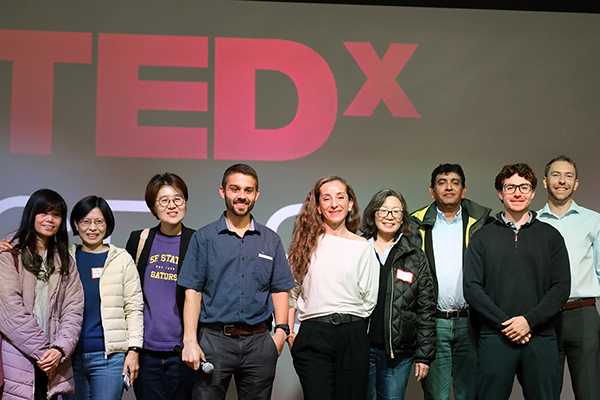
As the only public university in one of the world’s most forward-thinking cities, SFSU is a vital nerve center for new ideas and burgeoning talent. This makes our campus a prime location for a student-organized TEDx talk, bringing over 300 people to the Student Life Events Center on Nov. 15.
TEDx is a grassroots initiative of Technology, Entertainment, Design (TED), the distinguished nonprofit that presents live speaking events worldwide. Master of Business Administration (MBA) student Neil Sterud submitted an application for SFSU to host a TEDx talk. More than 20 additional students volunteered to help put on the event. For Sterud, organizing a TEDx event at SFSU is more than a career-building endeavor. It is a way to give back to the campus community.
“This is hands-on project management leadership. It’s a massive, very complicated deal,” said Sterud, who also serves as a second-class petty officer for the Navy Corps of Engineers. “It’s a feather in the cap. That’s another thing that I wanted for students, and that’s what I was telling people. I said, ‘Hey, jump on with this. Help out because brands on our resume matter. If you could put on your resume that you helped with an event like this, it could help with employers, and you shouldn’t wait until you’re out of college to try to get some experience.’”
The free event, themed “Seas of Change,” explored innovative, resilient and courageous responses to the uncharted waters in today’s society. The eight speakers spanned Bay Area nonprofit leaders as well as faculty from SFSU and the Cal Poly Maritime Academy covering topics such as addressing the housing crisis by building tiny homes, labor unions, artificial intelligence, branding, mental health and restorative justice. Magician Mike Toy (M.A., ’11) served as emcee.
Volunteers included Liza Kucherova, a senior in Marketing who implemented a multichannel marketing campaign and created the event’s web page. MBA student Alson Cheong played recruited other student volunteers and led a team that secured RSVPs and ran the check-in table.
“One of the main reasons I wanted to get involved is to serve our community and bring TEDx to San Francisco State. I also want to get valuable experience in event planning,” said Cheong, who serves as a Lam Family College of Business ambassador and is also studying for a Pre-Law certificate. “This experience really helped me see all the procedural steps that it takes to get an event like this done.”
The “TEDx at SF State” was made possible in part through the support of SFSU’s Lam-Larsen Student Engagement Initiative and sponsored by SFSU’s Lam Family College of Business (LFCoB). LFCoB staff also provided behind-the-scenes support to the LFCoB student ambassadors.
“LFCoB was delighted to sponsor the event,” LFCoB Dean Eugene Sivadas said. “Our college is global in aspiration and reach, but draws its strength from the communities we serve. It was a pleasure to bring interesting and diverse viewpoints for the benefit of our students and the larger community we serve.”
Learn more about SFSU’s Lam Family College of Business.
Photo courtesy of Associated Students Productions
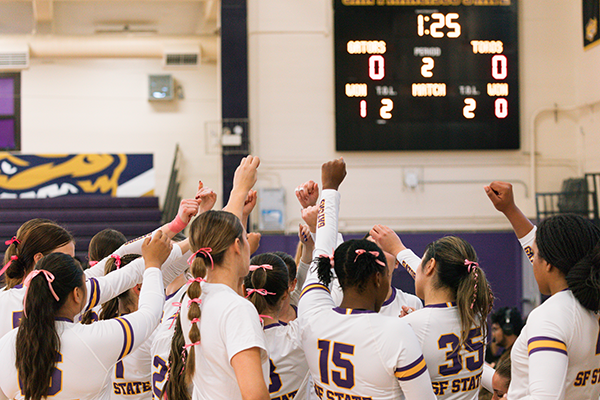
For the second straight year, SFSU has been named a finalist for the NCAA Division II Award of Excellence.
Division II has named 26 schools and one conference as finalists for the 2026 Award of Excellence. This award highlights initiatives that exemplify the Division II philosophy of community engagement and student-athlete leadership.
“This award is dedicated to all the supporters of Athletics, here at SF State,” Student-Athlete Advisory Committee (SAAC) adviser Paula Hsieh said. “Through the support of staff, faculty, outside stakeholders and especially our fellow students, we were able to come together to save Athletics at SF State through their acts of love, from speaking about how Athletics has impacted them, to holding meetings and fundraisers, to building alliances, this award truly belongs to our supporters. I thank our community for their continued support.”
The overall finalists were chosen by a committee of athletics administrators and the Division II Student-Athlete Advisory Committee, with the committee members ultimately selecting the top three finalists. Those honorees, including the winner, will be announced at the Division II business session this month at the 2026 NCAA Convention in the Washington, D.C., area.
Each finalist will receive $750. The winner will receive $3,000, with the second-place finisher getting $1,750 and the third-place finisher awarded $1,500. All prize money is intended to be used for future SAAC programming or community engagement events.
The theme of the Gators community engagement was “Act of Love.” San Francisco State launched a campuswide effort to save its programs after facing a system budget crisis and the potential elimination of athletics. Student-athletes, SAAC leaders, administrators and the Associated Students organization collaborated to advocate for a student fee increase, leveraging social media campaigns, meetings and campus engagement. Increased game attendance and a formal statement of support from Associated Students helped secure funding and preserve Athletics at SFSU.
After an extensive search, SFSU has named Brandon Davis as director of Athletics, effective Jan. 1. Davis served as interim director since September 2024 and now leads a program featuring 10 NCAA Division II teams and nearly 200 student-athletes.
“Brandon Davis brings steady, values-driven leadership to San Francisco State Athletics, along with a deep understanding of our students, our institution and our community,” said Jamillah Moore, vice president for Student Affairs and Enrollment Management. “His appointment provides important continuity and stability for the program while reaffirming our commitment to the holistic success of student-athletes — academically, personally and competitively. I am confident that under his leadership, Athletics will continue to advance the University’s mission and positively impact the lives of our students.”
“This is an incredible opportunity to lead the program, and I am grateful to Dr. Lynn Mahoney and Dr. Jamillah Moore for the opportunity,” said Davis. “We will continue to graduate student-athletes who excel in the classroom and in the field of play while embodying the University’s mission of creating positive change."
Davis joined SFSU as associate director of Athletics in January 2017 and served as senior associate director of Athletics for the University from 2019 to 2024 before being named interim director of Athletics. Before coming to SFSU, Davis spent a decade at his alma mater, Dominican University of California, where he held numerous roles in the Athletics and University Marketing departments. At Dominican, Davis helped the program transition from NAIA to NCAA Division II and was twice named PacWest Sports Information Director of the Year. From 2016 to 2019, Davis served on the NCAA Division II Softball National Committee and was the committee chair in 2019.
A native of the East Bay, Davis and his wife Melissa, along with their two children, reside in Oakland.
The Office of Strategic Marketing and Communications (SMC) has added a quick-start Brand Toolkit, providing access to updated SFSU branding resources in one place. The toolkit includes links to Canva branding templates, approved logos, photography, typography guidance and examples of branded stationery to support consistent University communications.
You can also find information on how to request assets, get guidance on applying the brand or connect with SMC for support on communications projects.
To further support campus partners, brand trainings and office hours will be offered in the coming weeks, with details to be shared soon. These sessions will provide an opportunity to learn more about the brand system and how to use the available tools effectively.
For questions or assistance, please email Strategic Marketing and Communications at marcomm@sfsu.edu.
Students, alumni and staff now have new ways to use the global career tools GoinGlobal and Interstride through the Alumni Association and SFSU Library databases, supporting career exploration and job searches in the United States and worldwide. These platforms will strengthen conversations with advisers, adding labor market insights, employer information and career preparation content. The Division of International Education remains the primary campus resource for F-1 regulations, optical practical training guidance, H-1B questions and related immigration advising.
Faculty and staff can now join a live online training that highlights practical ways to use GoinGlobal and Interstride in advising sessions, classes and alumni engagement. A GoinGlobal trainer will demonstrate country and city career guides, job and internship search features and tools for researching employers that sponsor work authorization. Participants will see examples they can share with students and alumni who plan global careers.
To take the training, register on the GoinGlobal website by selecting the “Training” option toward the top left side of the page and register for a specific date and time.
Academic Technology (AT) has compiled a list of video and support documentation resources to support instructors through their use of Canvas. From getting started and setting up your course to quizzes and grading, and everything in between, this guide is a starting point to answer your questions and get quick and targeted assistance with Canvas topics.
To get help from AT, please email at@sfsu.edu or visit the AT website.
SF State CREATE is launching a federal work-study undergraduate research, scholarship and creative activities (RSCA) program for spring 2026. Tenured/tenure-track faculty mentors in all colleges can apply to host paid undergraduate RSCA assistants.
Program highlights:
- No cost to faculty or departments; eligible students are funded through work study.
- Up to 15 student positions are available at $20/hour.
- Students can work 100 – 200 hours in spring 2026 dependent upon the level of their work-study award and financial aid package.
- Cohort model: Students meet monthly with SF State CREATE for professional development; program culminates in a spring RSCA showcase.
What to submit:
- Plain-language project summary (150 – 250 words)
- Expected tasks and skills you will teach in the first month
- Modality/location, typical meeting times and project timeline
- Any required skills vs. trainable skills
- Brief mentoring plan (check-ins, feedback)
- Indicate if you already have a student in mind for the assistantship or if you want SF State CREATE to help with recruitment, work-study eligibility confirmation or other placement considerations.
Please submit your project by Saturday, Jan. 31, via Qualtrics.
For questions, please email Kate Hamel, faculty director for Research Engagement and Development, at hamelk@sfsu.edu.
This spring, the AI Literacy Education Program will continue to offer core workshops to the SFSU community in a more streamlined format, with an emphasis on active learning and the practical application of artificial intelligence (AI) tools for SFSU faculty, staff and administrators.
Additionally, new topical and tool-focused workshops for a variety of roles, contexts and use cases will be offered throughout the semester. More information will be available soon.
The Center for Excellence in Teaching and Learning (CEETL) is pleased to announce its spring 2026 lineup of courses and professional development programs designed to support innovative teaching, inclusive pedagogy, course design and professional learning. Offerings include workshops, learning communities, certificate programs and short courses for faculty, instructional staff and graduate instructors across disciplines.
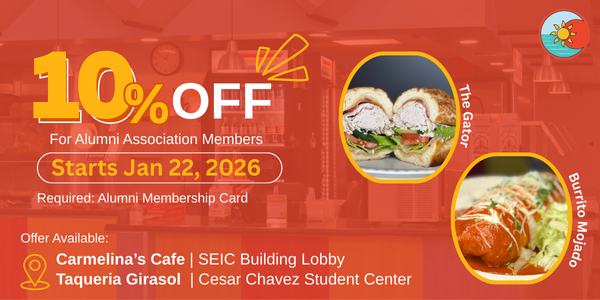
Starting Thursday, Jan. 22, our campus vendors Marco Ballesteros and Carmelina Narciso are offering a 10% discount for all Alumni Association members. Treat yourself at Taqueria Girasol in the Cesar Chavez Student Center and Carmelina’s Café in the new Science & Engineering Innovation Center.
The discount is good anytime and applies to the entire menu — just show your alumni card as proof of membership. Check your membership status by emailing alumni@sfsu.edu or visit the Alumni Association website to sign up for a lifetime membership.
Students, staff and faculty are invited to meet with Provost Amy Sueyoshi during her open office hours. Meetings will occur 8 – 9 a.m. on varying Thursdays depending on the provost’s availability.
Please reserve your time to discuss any topics. All meetings will be at the Provost’s Office in Administration 455. Breakfast refreshments will be provided.
To support informal connection and open conversation with our faculty, the Office of the Provost has launched a series of monthly brown bag lunches with Provost Amy Sueyoshi.
Faculty are invited to bring their own lunch and join the provost for a relaxed, in-person conversation about teaching, research, student success and topics of shared interest.
Please sign up for spring 2026 lunch dates via Qualtrics. Location will be provided a week before the scheduled monthly lunch. For questions, please email monas@sfsu.edu.
Join the San Francisco Federal Credit Union for a seminar to learn the basics of estate planning on Wednesday, Jan. 28, 5:30 – 7 p.m., at its branch at 770 Golden Gate Ave. in San Francisco.
Estate planning is an essential step in securing your financial future and protecting your loved ones. The seminar will cover beneficiary designations, wills, trusts, power of attorney and tips for avoiding probate. Food and refreshments provided.
Please register via Microsoft Forms for the estate planning seminar.
The University Budget Committee (UBC) invites the campus community to a review of California Gov. Gavin Newsom’s proposed budget for 2026 – 2027 as it affects the CSU. This meeting will be held Thursday, Jan. 29 at 10:30 a.m. via Zoom.
The next UBC meeting on Thursday, Feb. 26, returns to its typical agenda. Meetings continue through May. Please RSVP to UBC meetings by emailing ubc@sfsu.edu.
All campus employees are invited to attend these meetings. UBC members represent staff, faculty, students and administrators. Can’t attend? Please visit the Administration and Finance website to access slideshows and minutes from past meetings or request the recording from a recent meeting.
The Student Fee Advisory Committee will hold its first meeting of the spring semester on Thursday, Feb. 19, at 3 p.m. via Zoom.
Members of the campus community who wish to request the establishment or adjustment of Category II or Category III fees for the fall semester must email their proposals to vpsa@sfsu.edu by Sunday, Feb. 1.
The Office of Research and Sponsored Programs, in partnership with the University Research, Scholarship and Creative Activities Council and Academic Technology, invites you to participate in the “SFSU Research in the Age of AI Symposium.” It will be held Friday, Feb. 20, 8:30 a.m. – 1:30 p.m., in Library 121 and 286.
All SFSU faculty are welcome, regardless of artificial intelligence (AI) experience level, to explore how AI is transforming the research landscape.
Program highlights:
- Keynote address: Gaurav Suri, associate professor of Psychology and author of “The Emergent Mind: How Intelligence Arises in People and Machines”
- Ethics panel: A critical discussion with SFSU faculty on research ethics in the age of AI
- Parallel research Sessions: Faculty “lightning talks” showcasing research on and with AI
- “Birds of a Feather” lunch: Network with colleagues over facilitated discussions on AI research topics of mutual interest (disciplinary clusters, scholarship of teaching and learning on AI, grant writing with AI, institutional review board/ethics and AI, qualitative/quantitative methods, etc.).
Please complete the Qualtrics form to submit a proposal and to register. Proposals are due Friday, Feb. 6. Register to attend by Friday, Feb. 13.
For questions, please email Professor Kate Hamel, faculty director for Research Engagement and Development, at hamelk@sfsu.edu.
The San Francisco Giants take on the Philadelphia Phillies on Tuesday, April 7, starting at 6:45 p.m. Enjoy a night with fellow Gators while wearing an exclusive co-branded roped hat that's included with the purchase of a ticket.
The SFSU community is saddened to learn of the passing of Beatrix “Trix” Salih. She passed away on Dec. 8.
Salih was a valued member of the Human Resources team during her final years at SFSU, where she was known for her professionalism, kindness and dedication to supporting faculty and staff. Colleagues remember her warm presence, her steady guidance and the care she brought to every interaction.
Her family shares that she spoke often and fondly of her time at SFSU and the friendships she formed on campus. She will be deeply missed by all who knew and worked with her.
The Department of Public Health extends its heartfelt condolences to her family, friends and former colleagues.
Retired staff member Barbara A. Galehouse, passed away unexpectedly on Nov. 25 in Elk Grove.
Born on March 18, 1939, in Doylestown, Ohio, Galehouse spent her formative years in the town where she also met her future husband, Professor Emeritus of Geology Jon Galehouse, both at age 5.
After starting a family, they settled in Pacifica in 1968, where Barbara Galehouse became deeply involved in civic and educational initiatives. She co-founded the Oddstad Elementary Home and School Club and served as its president for two years. She tutored children with limited language skills and participated in numerous citizens’ advisory committees. Her dedication to community service extended to long-standing roles on the boards of Pacifica Community Television and the Pacifica Democrats, where she served terms as president. In 1989, she was elected as a delegate to the California State Democratic Convention and chaired the Democratic 19th Assembly District for one year. She was also an active volunteer in many successful local and statewide Democratic campaigns and was a leader in the environmental group Friends of Pacifica for over a decade.
In recognition of her tireless commitment to public service, state Sen. Quentin Kopp named her the 1989 Woman of the Year for California’s eighth Senate district.
In 1978, Barbara Galehouse resumed full-time work as a department secretary at SFSU — first with Recreation and Leisure Studies, then with Health Education. Her leadership extended into University life as well; she served on several search committees, including one for University president. She was a devoted member of University Women for nearly two decades, holding various leadership roles including president.
Barbara and Jon Galehouse retired from SFSU in 1997 and moved into a log home they designed and built on the banks of the Feather River in Plumas County. There, she remained active in a local women’s group and served for over 15 years on the board of their homeowners’ association.
Barbara Galehouse was preceded in death by her parents Evelyn (née Goffinet) and William Adams; her brother Paul Adams; her sister Mary Shick; and her son Scott Galehouse. She is survived by Jon, her husband of 66 years; her daughter Jennifer (Alex); her brother Jerry Adams; her sister-in-law Barbara Kollier; and her nieces Amelia (Josh) and Molly (Nate).
In memory of Barbara Galehouse, donations can be made to a nonprofit that helps people in need. The family also encourages all to “be kind to one another — and take the time to read a good book.”
On Dec. 10, Professor Emeritus of Broadcast and Electronic Communication Arts (BECA) John Hewitt passed away, surrounded by family.
Hewitt was part of the BECA family from 1974 to 1997. In that time, he taught thousands of students, primarily documentary production, and encouraged each of them to be creative and find their story. His textbook “Documentary Filmmaking: A Contemporary Field Guide” (Oxford University Press, 2009), authored with University of California professor and documentarian Gustavo Vazquez, is used in universities throughout the United States.
Hewitt was a prolific creative. His documentaries include: “Landmines of the Heart: Cambodia’s Struggle for Reconciliation” (1999) for PBS Plus and KQED, “Smokestack Lightnin’: The Life of Howlin’ Wolf” slated for PBS and “Deadline Every Second” (2010).
In his own words:
“Forty years as documentary producer, editor and shooter.
Thirty-two years teaching broadcast communications at San Francisco State University.
Thirteen years teaching at Stanford Mass Media Institute.
Thirteen years as television news producer.
Four years as newspaper reporter, magazine editor.
Author of three television news textbooks.
Four difficult years as a snarky novelist: ‘Stranger in Baja,’ ‘Under the Padre’s Thumb’ and ‘Drone Baloney.’”
Hewitt left a legacy and touched countless lives. He will be deeply missed.
His final legacy: a tree planted in his memory. A memorial reception was held Jan. 18.
Hewitt is survived by wife Annette, brother Bill (Marilyn), son Dan (Jessica), stepdaughter Nicole Sofios (Dean) and grandchildren Riley and Caroline, as well as countless other friends, former colleagues, students and neighbors.
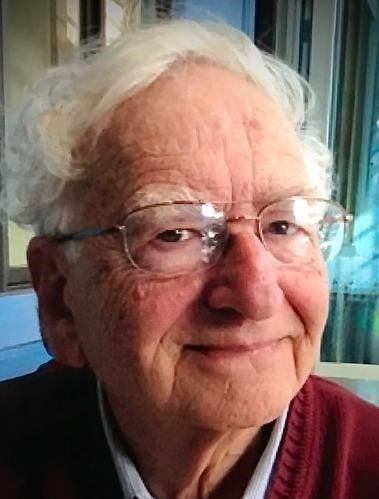
Manfred Wolf, professor emeritus of English Language and Literature, was fond of saying that he had adopted several identities in his life: Dutch boy, Jewish refugee in the Caribbean, immigrant to the U.S., professor, writer and finally all those identities associated with family. Surrounded by friends and loved ones, the longtime San Franciscan died Dec. 22 after a long illness. He was 90.
At age 21, Wolf started as an instructor at San Francisco State College. He received emeritus status at SFSU in 2000, thus completing 44 years of teaching.
Wolf was born New Year’s Day 1935 in Chemnitz, Germany. In 1937, the Wolf family of four moved to Holland “in search of a better life,” away from the mounting antisemitism of Nazi Germany. In an idyllic small town near Amsterdam, they found that better life, but it was short-lived.
In 1940, the Nazis claimed the Netherlands, and by early 1942 Max Wolf, a Polish-born businessman, saw three bad options for him and his wife, Bertha, and their two children, Siegfried and Manfred. They could wait out the war, hide (in the fashion of the Frank family) or flee.
Hastening the decision making, a Dutch policeman passed on the tip that the Wolfs were about to be deported to an unknown destination. They fled a furnished home, hopped on a train, and embarked on a yearlong escape.
For a great many years, Manfred Wolf avoided discussing, chronicling, or otherwise wrestling with his past. At midlife, he was drawn toward it.
Wolf’s definitive memoir, “Survival in Paradise” (2014), is an account of the family’s flight through Belgium, France, Spain and Portugal. It is a tale of border crossings and bribes, concealed identities and forged documents. The family’s eventual safe haven was the Caribbean island of Curaçao, both Dutch-speaking and blessed with a modest, nestled Jewish community.
At age 16 in 1951, Wolf enrolled at Brandeis University in Massachusetts. By age 21 he had graduated from Brandeis, married Barbara Young (1933 – 2024), settled in San Francisco and soon after started a family.
Arriving in the U.S. fluent in German, Yiddish, Dutch and French, Wolf assimilated rapidly and remarkably achieved an unaccented English. Still, he remained conscious of his upbringing and continued to read in Dutch and to specialize in Dutch translation, the focus of his eventual Ph.D.
In hundreds of columns and several books published throughout his lifetime, Wolf took advantage of this outsider’s perspective, adhering to the view that American culture was “incurious and sentimental” but generally welcoming and good-natured.
“It’s one of the few places in the world,” he would say, “where people really do want you to have a nice day.” In another book, “Almost a Foreign Country” (2008), Wolf describes his fondness for (along with his mixed feelings about) the United States.
Family members say Wolf’s outsider’s view and attunement to language were key to his acerbic sense of humor, replete with impersonation, imitation and outlandish characterizations. He maintained warm, lasting friendships and correspondences in the U.S. and Europe.
In mid-career he taught at the University of Helsinki and, after his retirement from SFSU, at the University of California, Berkeley, and the Fromm Institute at the University of San Francisco. His freelance writing continued in thousands of columns and articles.
Wolf is survived by his three sons, Dana, Michael and Paul Wolf; four grandchildren, Sam, Lucie, Alyssa and Josh Wolf; and great-grandson, Beckham Wolf Raphel.
SF State Spotlight
Creative Writing Professor and Chair Chanan Tigay recently won awards from the Society for Features Journalism, Association for Alternative Newsmedia, San Francisco Press Club and American Jewish Press Association.
The awards honor Tigay’s article about Israeli archaeologists who were drafted to search for people missing after the Oct. 7, 2023, attack by Hamas.
Associate Director of Early and Regional Engagement Marciana Flores Atkinson is featured on UC Berkeley Extension’s Voices website, in a Jan. 5 profile about her. She says the Marketing certificate she earned from Berkeley Extension prepared her aptly for her work at SFSU and gave her the confidence to pursue graduate school. Flores Atkinson completed earned a Master of Arts degree from SFSU’s Graduate College Education in 2025.
Counseling Professor Kwong-Liem Karl Kwan is the author of “A Little Book About the First Helping Session: Supervision Notes for Beginning Counselors” (Kendall Hunt, 2026). It prepares beginning counselors to ground their practice in presence, purpose and relationship and to develop a professional identity shaped by cultural humility and a deep respect for the dignity of every client.
His book highlights three unique features:
- Relational-ethical approach to informed consent: Learn how to prepare and present clear, ethical informed consent in both in-person and telehealth settings. This approach uses client-centered language to build trust, support autonomy and establish ethical relationship from the very first contact.
- The QLRQ Sequence: Apply a structured yet flexible sequence of Question, Listening, Reflection and follow-up Question. This method helps counselors maintain a relational rhythm that balances information gathering with empathy, especially during the early phase of client exploration and connection.
- Kenosis: Embrace a self-emptying posture that frees counselors from judgment and self-protective patterns, while staying grounded in their core identity. Modeled after the biblical figure of Jesus, kenosis fosters cultural humility, grace and the hope of authentic connection across deep differences.
In December, Librarian Emeritus Ned Fielden presented a paper at the biannual Australian and New Zealand Association for Medieval and Early Modern Studies conference held at the University of Melbourne in Australia.
Titled “17th Century Oxford/Cambridge Library Expansions: Anticipating Future Scholarship,” the paper traces the development of academic libraries in England’s two major universities. The growth of collection sizes and the changing nature of scholarship urged the adoption of more professional approaches to library management, particularly in the area of catalog creation, while greater funds and attention to libraries resulted in new, sometimes strikingly innovative library designs to accommodate increasing numbers of scholars and the size and diversity of collections. Advances to libraries in the 17th century paved the way for more sophisticated approaches to advancing scholarship for future times.
Associate Professor of American Indian Studies Robert Keith Collins chaired a roundtable and presented a paper at the “Ghosts”-themed national meeting of the American Anthropological Association in New Orleans on Nov. 19 – 25. His roundtable is titled, “Interrogating the Intersections of Red and Black Ghosts in the Americans: New Directions in Studying African-Native America.”
Central in the round table discussion was an examination of the following question: What can an interrogation of the ethnographic study of African-Native American lives in the Americas reveal about problems and prospects for future research? To explore this question, this roundtable brough into conversation anthropological, historical, and sociological perspectives on questions related to new directions in the study of the African and Native American interactions, African cultural change in Native America, Native Americans with African ancestry, the anthropological origins of this research, how scholars across disciplines have understood the experiences of African-Native Americans, and emerging paradigms that further understanding of their lives in the Americas.
Collins’ paper is titled “The Ghostly Relevance of Native America to Black Anthropology: Allies, Citizens, Marrons, Slaves” and was presented on the panel titled “Marrons, Indians and Others: Ghost-hunting Black, Native and Latino Cultural Exchanges in Outlaw Geographies.” It explores the relevance of Native America to Black Anthropology and took a person-centered ethnographic approach to the apparitions of alliances, fellow citizens, fellow slaves, maroons, and servants that have shaped the nature of African and Native American interactions examined by anthropologists within the present-day boundaries of the United States.
Marc Stein, the Jamie and Phyllis Pasker Professor of Constitutional Law and U.S. History, is the author of “Bicentennial: A Revolutionary History of the 1970s,” new from University of Chicago Press. The Pittsburgh Review of Books published an excerpt from the book on Jan. 1.
Recreation, Parks, Tourism and Holistic Health Professor Erik Peper authored the article “Breathe Away Menstrual Pain: A Simple Practice That Brings Relief” in Townsend Letter on Dec. 15.
Jeffrey Duncan-Andrade, professor of Latina/Latino Studies and Race and Resistance Studies, is again among the most influential scholars in the U.S., according to an annual study published Jan. 7. This is the fifth consecutive year that Duncan-Andrade is included.
Frederick M. Hess, director of education policy studies at the American Enterprise Institute, creates the annual Edu-Scholar Public Influence Rankings for Education Week. It spotlights the top 200 education scholars — among over 20,000 nationwide — who move ideas from academic journals into the national conversation. Using nine metrics, Hess calculates how much university-based academics contributed to public discussions of education.